
A Hands-On Walk Through Puglia's Dry Stone Walls

A Craft Older Than Memory
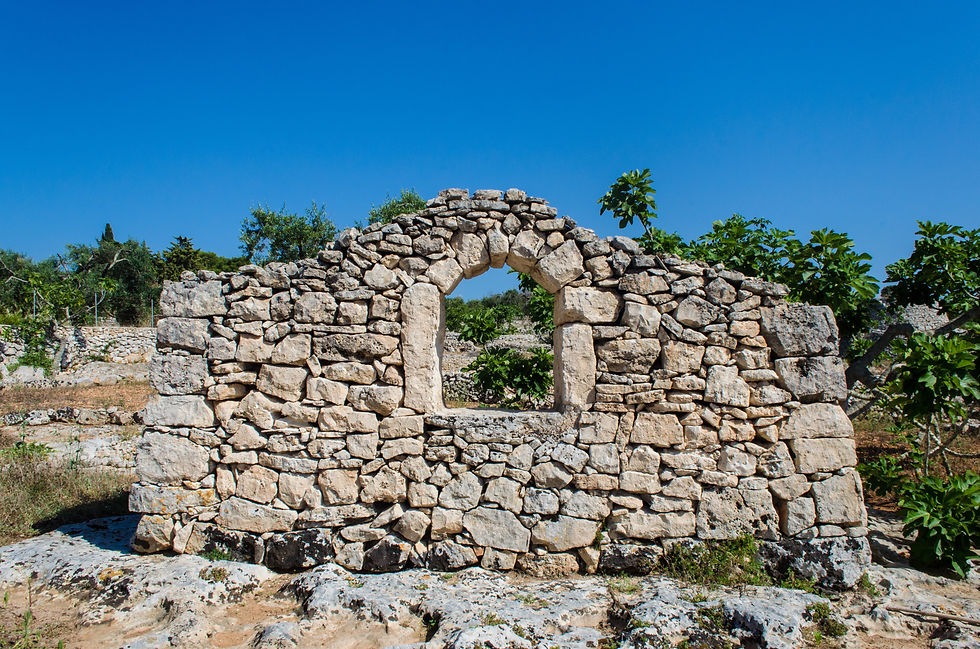
Long before Puglia's trulli became postcards, the hands that built them were already masters of a quieter skill: stacking local limestone, without a drop of mortar, into walls that have held for centuries. This technique — known as muretti a secco, the dry stone wall — is the same one that shaped the trulli themselves, and in 2018 UNESCO recognised it as part of humanity's intangible heritage. It is still practised today, by people who learned it the way it has always been taught: hand to hand, stone by stone :

Walking the Land First
The experience begins the way most good things in Puglia do — outdoors, on foot. A trekking route through the countryside around Vigna il Castagno, in the Itria Valley, leads guests past the dry stone walls that still divide the fields, the same low boundaries farmers have maintained for generations. It is a chance to see the landscape as locals do: not as scenery, but as something built and tended, wall by wall.
Building, Not Just Watching
What sets this afternoon apart is that it does not stop at admiration. Guests are shown, in person, how a dry stone wall actually comes together — how stones of different shapes are chosen and fitted so the structure holds its own weight, with no cement to hide a mistake. It is slower and more exacting than it looks, and that is precisely the point: this is a craft best understood with your own hands, not through a car window:
A Pause, Puglia-Style
No experience here ends without the table. After the walk and the workshop, a typical local snack is served alongside a glass of wine from the estate — a simple, well-earned pause that lets the morning's effort settle into something closer to a memory than an activity.
Why It Stays With You
We recommend this experience to guests who want Puglia beyond the view from a terrace: families curious to work with their hands together, couples who prefer a story to a souvenir, travellers who ask questions and want real answers. It photographs beautifully, but that is almost beside the point — what people remember afterwards is the weight of a stone in their hand, and the quiet satisfaction of having helped build something that will likely outlast them.
At around two hours, it fits easily alongside a morning at a masseria or an evening by the sea, without crowding either.
Planning Your Own Version of This Day
We never send two guests down the exact same path. If this kind of hands-on, unhurried morning sounds like something you'd love, tell us who you're travelling with and what else you'd like your days in Puglia to hold — we'll build an itinerary entirely around you.
Comments